Transportation for Political Campaigns: How to Organize Electoral Logistics
Learn how to organize transportation for political campaigns, with executive cars, vans, minibuses and buses for candidates, teams and election schedules.
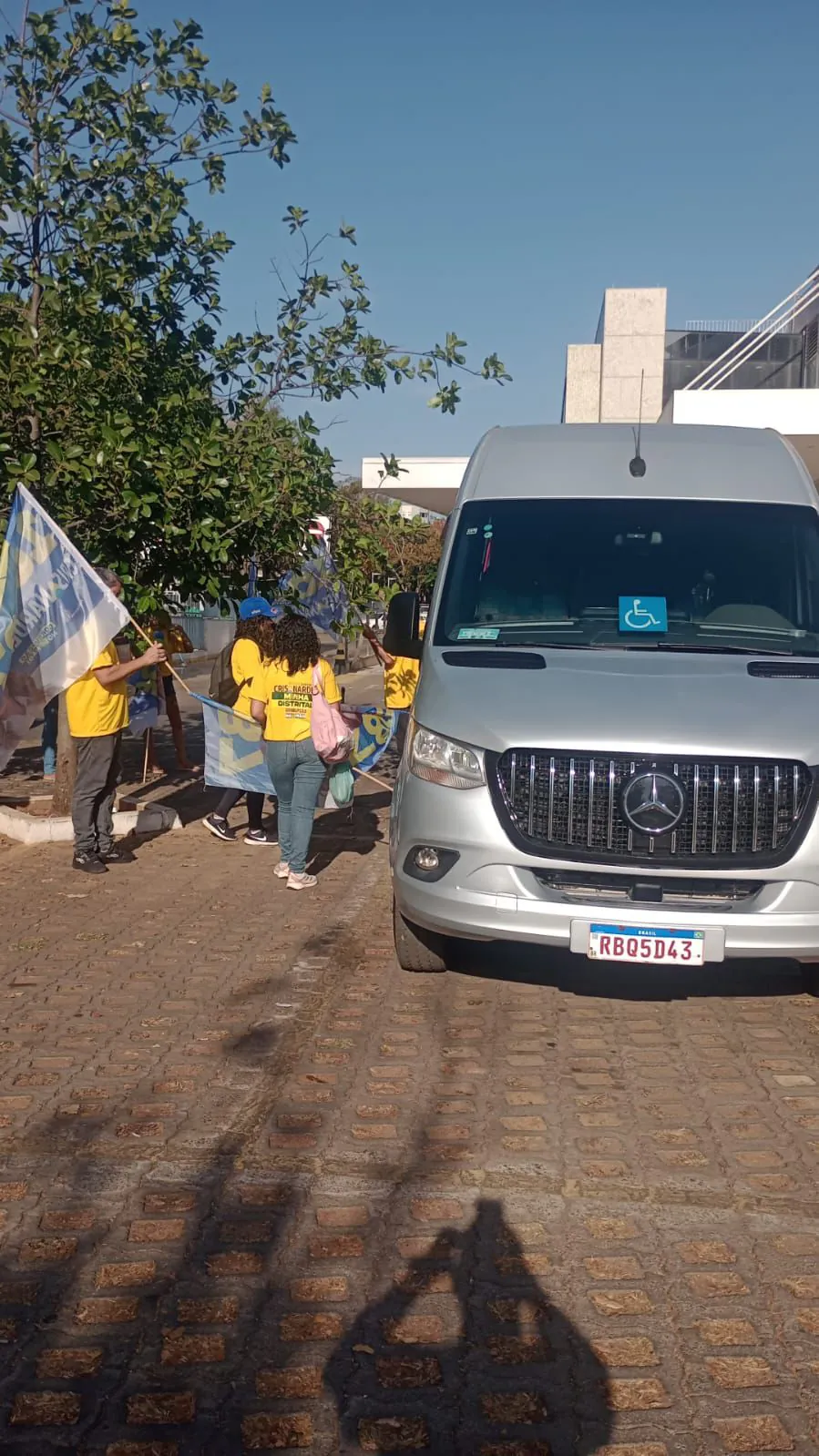
A political campaign involves much more than communication, events and public engagements. Behind every schedule there is an operation that needs to ensure that candidates, advisors, teams and materials are in the right place at the planned time.
In this scenario, transportation for political campaigns becomes part of the campaign’s own electoral logistics.
A schedule may start early with an interview, continue with meetings, visits to different regions, recordings, walks and events, and only end at night. In addition, changes to times and destinations may happen throughout the day.
For this reason, organizing transportation in advance can reduce delays, unnecessary trips and communication problems between teams.
How does transportation for political campaigns work?
Transportation for an election campaign can take different formats according to the size of the operation.
In a smaller schedule, an executive car can remain at the disposal of the candidate and their advisory team throughout the day.
In larger campaigns, the operation may simultaneously involve sedans, SUVs, vans, minibuses and buses.
Planning should consider factors such as:
- number of passengers;
- number of teams;
- regions served;
- duration of the schedules;
- planned times;
- number of engagements per day;
- need to transport materials;
- simultaneous trips;
- travel between cities;
- need for vehicles on standby.
The greater the number of engagements, the more important it becomes to centralize the operation’s information.
Why is transportation logistics important during an election campaign?
Political campaigns have a different characteristic from many other types of operations: the schedule can change quickly.
An engagement may be delayed. An interview may be added. A meeting may change address. An event may end earlier or later than expected.
When each driver receives information separately, the risk of miscommunication increases.
For this reason, larger operations may work with a central coordination team responsible for updating drivers and teams about times, destinations and route changes.
Transportation organization must keep pace with the campaign’s dynamics.
Candidate transportation
The vehicle used by the candidate usually needs to offer comfort, availability and flexibility.
Executive sedans and SUVs are common options for this type of operation.
Depending on the schedule, the vehicle can remain available for several hours, allowing travel between meetings, interviews, events, visits and other engagements.
In this model, it is important to evaluate not only the initial route, but the entire schedule planned for the day.
Vehicle on standby or transfer?
There is an important difference.
In a transfer, the vehicle carries out a previously defined trip between origin and destination.
In the on-standby service, the car and driver remain available for a certain period to carry out a sequence of engagements.
For political schedules with several destinations throughout the same day, a vehicle on standby can offer greater operational flexibility.
Transportation for advisors and campaign teams
The candidate and the team do not always need to use the same vehicle.
Advisors, communications, production, photography, security and other teams may have different schedules and needs.
An executive van can be used to gather part of this team in a single vehicle.
Depending on the number of people, minibuses or buses may also be used.
The advantage is reducing the number of independent cars circulating and making trip coordination easier.
Which vehicles can be used in political campaigns?
The choice depends mainly on the role of each vehicle within the operation.
Executive sedan
Recommended for candidates, leaders, guests and small groups.
It can be used for transfers or remain on standby during a schedule.
SUV
Offers more interior space and luggage capacity, making it an alternative for schedules that require more comfort or longer trips.
Executive van
Recommended for advisors, communications teams, production teams, guests and small groups.
A single van can replace several cars in certain operations.
Minibus
Can serve larger teams and operations that need to move groups simultaneously between different points on the schedule.
Bus
It is used when there is a need to transport a larger number of people, especially at events, meetings, conventions and other group operations.
Transportation for political schedules
A campaign can have dozens of different types of engagements.
Among them are:
- interviews;
- debates;
- meetings;
- recordings;
- institutional visits;
- meetings with supporters;
- events;
- walks;
- airports;
- hotels;
- studios;
- travel between cities.
Planning should consider the actual time needed between one engagement and another.
A common mistake is to analyze only the distance in kilometers.
Traffic, rush hour, boarding and disembarking, access to the location and possible route changes also affect the time required.
How to organize several vehicles in a campaign?
When a campaign uses several vehicles simultaneously, each car needs to have a defined role.
Imagine an operation with:
- one vehicle for the candidate;
- one vehicle for close advisors;
- one van for communications and production;
- another van for the operational team;
- one support vehicle.
If each driver works only with isolated information, any change can cause teams to miss each other.
A more organized structure can establish a central communication point.
Coordination monitors:
- planned departure time;
- vehicle location;
- next destination;
- changes to the schedule;
- need for repositioning;
- completion of each schedule.
This makes it possible to adapt the operation when the schedule changes.
Transportation in two or more shifts
Not every campaign needs to keep vehicles continuously on standby.
There are operations in which the transportation need is concentrated in specific periods.
For example:
Morning shift: transporting teams to the work regions.
Afternoon/evening shift: picking up teams and returning.
This model can be used mainly in field operations.
Before hiring, it is important to define the number of passengers, meeting points, approximate times and regions that will be served.
Transportation of campaign materials
In addition to people, some operations need to move materials.
Before defining the vehicle, it is necessary to report the approximate volume of the load.
A van used to transport 15 passengers, for example, will not necessarily have enough space for the same 15 passengers accompanied by a large quantity of materials.
For this reason:
passenger capacity does not mean operational capacity.
People, luggage and materials must be considered together when choosing the vehicle.
Transportation for motorcades, walks and political events
Motorcades, walks and marches are part of the activities provided for under electoral legislation, in compliance with the rules and periods defined by the Electoral Justice.
The transportation logistics related to these events must be planned separately from the advertising strategy.
There may be a need for vehicles to transport teams, for participant arrival and departure, production and operational support.
The campaign must also previously verify the electoral rules applicable to sound cars, motorcades and other forms of advertising.
Transportation for political campaigns in Brasília
Brasília has specific characteristics for an electoral operation.
Schedules may involve engagements in Plano Piloto and, a few hours later, trips to different administrative regions of Distrito Federal.
There may also be engagements at airports, hotels, studios, event centers and cities in the Entorno.
For this reason, an apparently simple schedule may represent a significant number of trips during the day.
Planning vehicles by role and region can be more efficient than concentrating the entire operation on a single itinerary.
Campaigns with travel to other cities
Statewide and national campaigns may require road trips and operations in different cities.
In these cases, planning should consider:
- total distance;
- travel time;
- tolls;
- fuel;
- accommodation for the operational team when necessary;
- rest periods;
- number of drivers;
- vehicle availability at the destination;
- return schedule.
For long operations, these details need to be defined before the service begins.
7 mistakes in organizing transportation for an election campaign
1. Defining the vehicle only by the number of passengers
Luggage, equipment and materials also take up space.
2. Creating schedules without considering traffic
A short distance may require a lot of time at certain hours.
3. Not informing drivers about changes
Last-minute changes need to reach the entire operation quickly.
4. Putting all teams on the same schedule
Communications, advisory staff, production and the candidate may need to follow different schedules.
5. Not allowing time for boarding and disembarking
Larger groups take longer to enter and leave the vehicles.
6. Not defining who is responsible for the operation
When several people give different instructions to the driver, the risk of error increases.
7. Hiring vehicles without considering the actual duration of the schedule
A schedule planned for eight hours can easily extend when there are several engagements.
What should be provided when requesting a quote?
The more information is made available, the more accurate the planning can be.
Before requesting a quote, try to provide:
- city or state of the operation;
- campaign period;
- number of days;
- approximate number of passengers;
- types or number of vehicles;
- planned times;
- regions served;
- need for travel;
- number of shifts;
- need for vehicles on standby;
- existence of materials or equipment.
If the schedule is not yet fully defined, a preliminary program already helps with sizing the operation.
Is it possible to hire transportation for the entire election period?
Yes.
Depending on the need, transportation can be hired for a specific schedule, a few days or for a longer operation.
Campaigns that work daily with teams in the field can structure fixed vehicles for a certain period.
In this scenario, it is important to previously establish hour and kilometer allowances, work shifts, regions served and conditions for schedule changes.
How to choose a transportation company for a political campaign?
Price should not be the only criterion.
In electoral operations, it is also important to evaluate:
- vehicle conditions;
- drivers’ experience;
- service capacity;
- operational support;
- possibility of vehicle replacement;
- communication during the service;
- necessary documentation;
- capacity to serve multiple vehicles simultaneously.
An operation with ten vehicles requires a different structure from a transfer performed by just one car.
Frequently asked questions about transportation for political campaigns
Is it possible to leave a car at the candidate’s disposal?
Yes. The vehicle can remain on standby for a previously contracted period, following the schedule.
Is it possible to hire vans for campaign teams?
Yes. Vans can serve advisory, communications, production and other teams, depending on the number of passengers and materials.
Is it possible to hire several vehicles at the same time?
Yes. Larger operations can use different vehicle categories simultaneously.
Can the company serve campaigns in other cities?
This depends on the transportation company’s service area and the required schedule. Interstate operations must be planned in advance.
Is it possible to work with two shifts?
Yes. When the operation is concentrated in specific periods, departure and return times can be planned according to the campaign’s needs.
Is it possible to change the itinerary during the service?
In on-standby services, changes can be made according to the previously contracted conditions and operational availability.
Planning is part of electoral logistics
An election campaign has tight schedules, different teams and a program subject to changes.
For this reason, transportation should not be treated only as travel between two addresses.
The appropriate vehicle, driver, schedule planning, communication and coordination need to work together.
Roas Transfer carries out transportation operations for political campaigns, candidates, advisors and teams, with executive cars, SUVs, vans, minibuses and buses.
For operations in Brasília, Distrito Federal or trips to other locations, the schedule can be sized according to the number of passengers, the operation period and the needs of each team.